Technical
Deep Dives

Comprehensive handbooks on machine learning, NLP, and AI systems. Free to read online, no registration required.

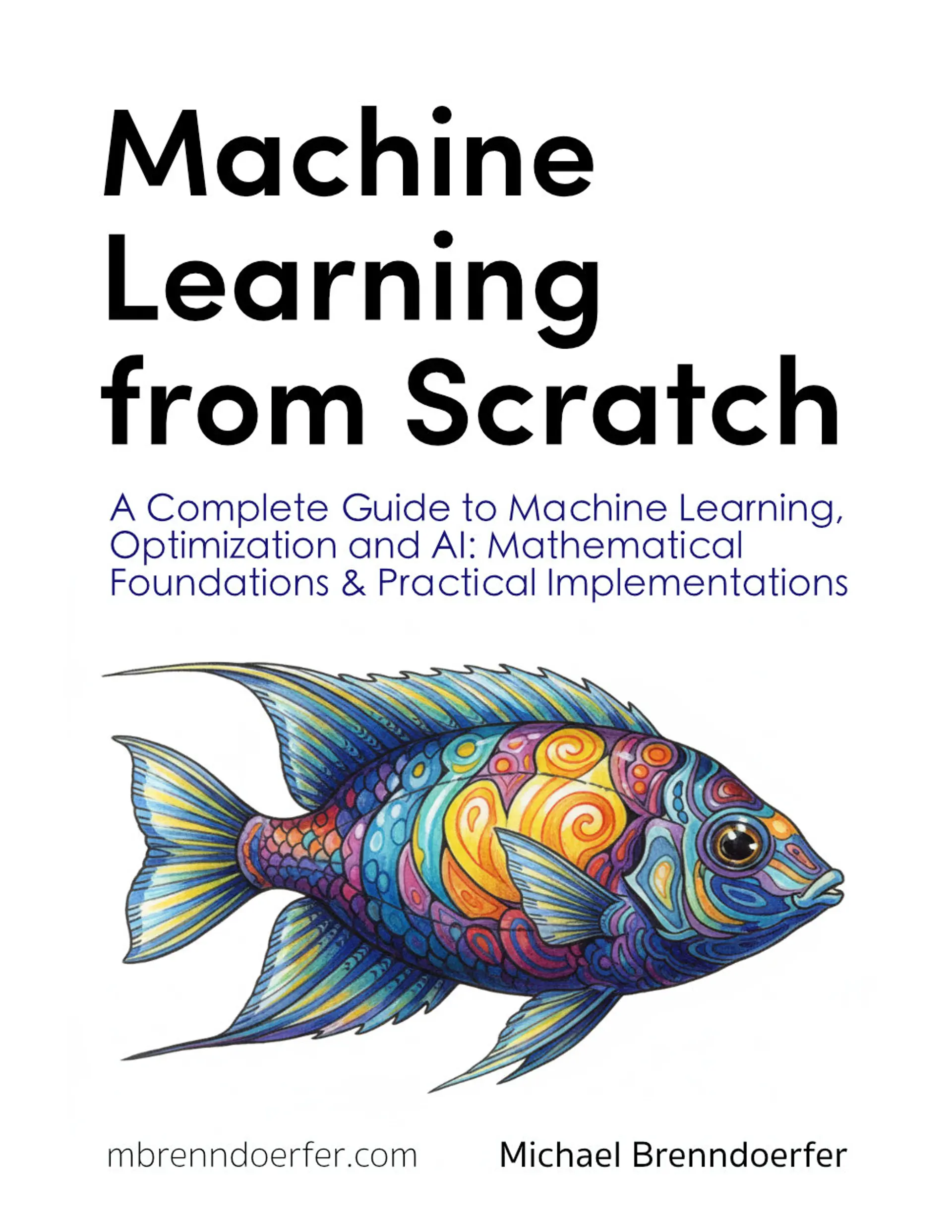
Machine Learning from Scratch

A Complete Guide to Machine Learning, Optimization and AI: Mathematical Foundations and Practical Implementations

43h 27m
66 of 67 chapters
10 parts

What separates a data scientist who truly understands their craft from one who merely applies black-box tools? The answer lies in mastering the mathematics and intuition behind every algorithm. This comprehensive handbook bridges the gap between theoretical foundations and black-box function calling, giving you the deep understanding that transforms good practitioners into exceptional ones.

From the elegant simplicity of linear regression to the sophisticated power of gradient boosting and neural networks, every concept is built from first principles. You won't just learn how to use scikit-learn. You'll understand exactly what happens under the hood when you call fit() and predict(). Each algorithm is derived mathematically, explained intuitively, and implemented in clean, Python code.

Written for

Data scientists, ML engineers, AI engineers, researchers, students, quants, and anyone serious about understanding machine learning at a fundamental level.

Machine LearningMathematical FoundationsClusteringRegressionTree-Based ModelsExplainabilityTime SeriesUnsupervised LearningOptimizationArtificial IntelligencePractical Applications

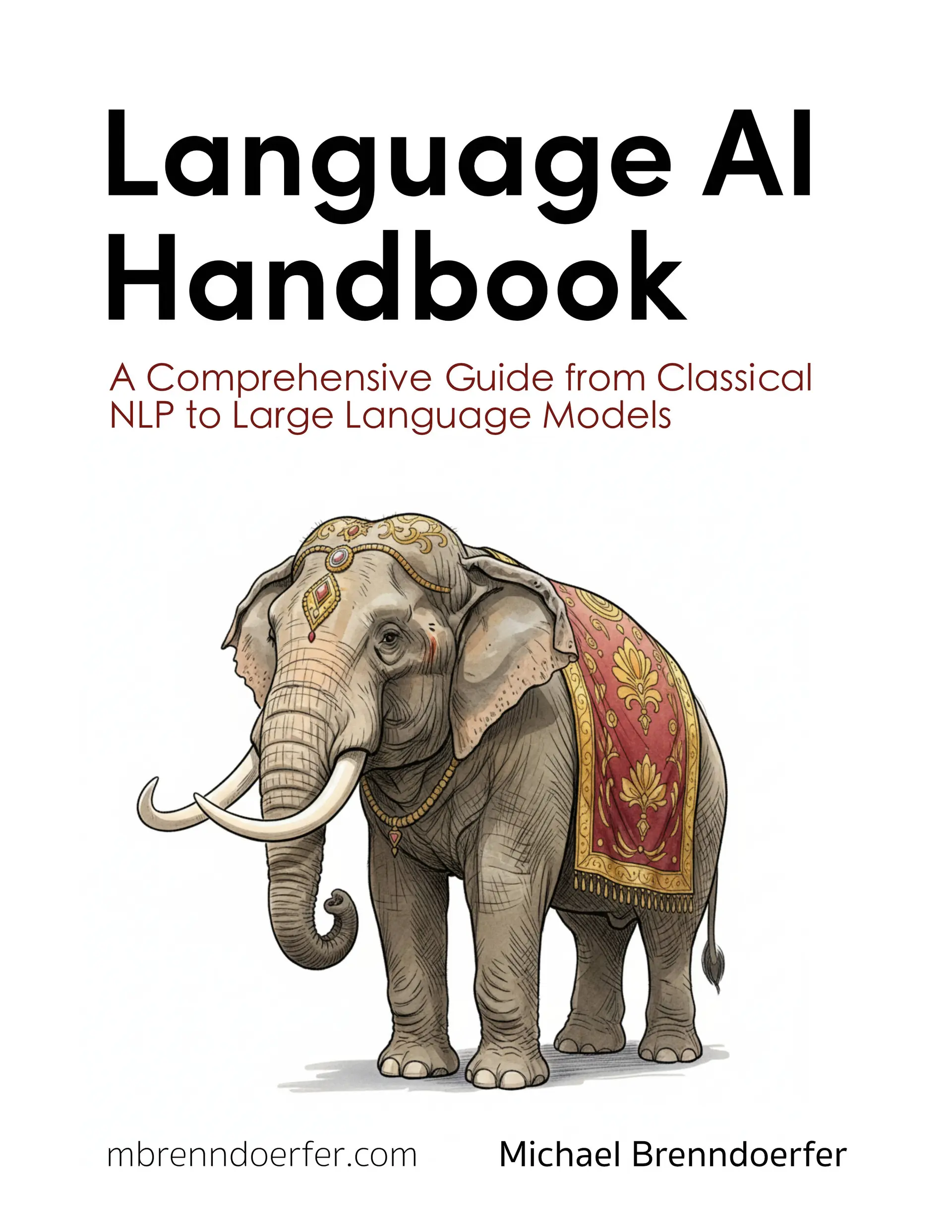
Language AI Handbook

A Complete Guide to Natural Language Processing and Large Language Models: From Classical NLP and Transformer Architecture to Pre-training, Fine-tuning, and Production Deployment

139h 9m
210 of 380 chapters
47 parts

Language AI has transformed from an academic curiosity into the defining technology of our era. But beneath the hype of ChatGPT and Claude lies a rich technical landscape that most practitioners only partially understand. This handbook gives you the complete picture, from classical NLP techniques that still matter to the cutting-edge architectures powering today's most capable systems.

Begin with the fundamentals that never go out of style: tokenization, embeddings, and the statistical foundations that inform modern approaches. Then dive deep into the transformer architecture. Learn not just how to use it, but how it actually works. Understand self-attention mathematically, grasp why positional encodings matter, and see how architectural choices like layer normalization affect training dynamics.

Written for

Engineers, researchers, students, AI enthusiasts, linguists, product managers, and anyone interested in understanding or building modern language AI systems, from foundational NLP to advanced large language models.

History of NLPNLP FundamentalsTransformer ArchitecturesLanguage ModelsFine-tuning TechniquesLatest Research

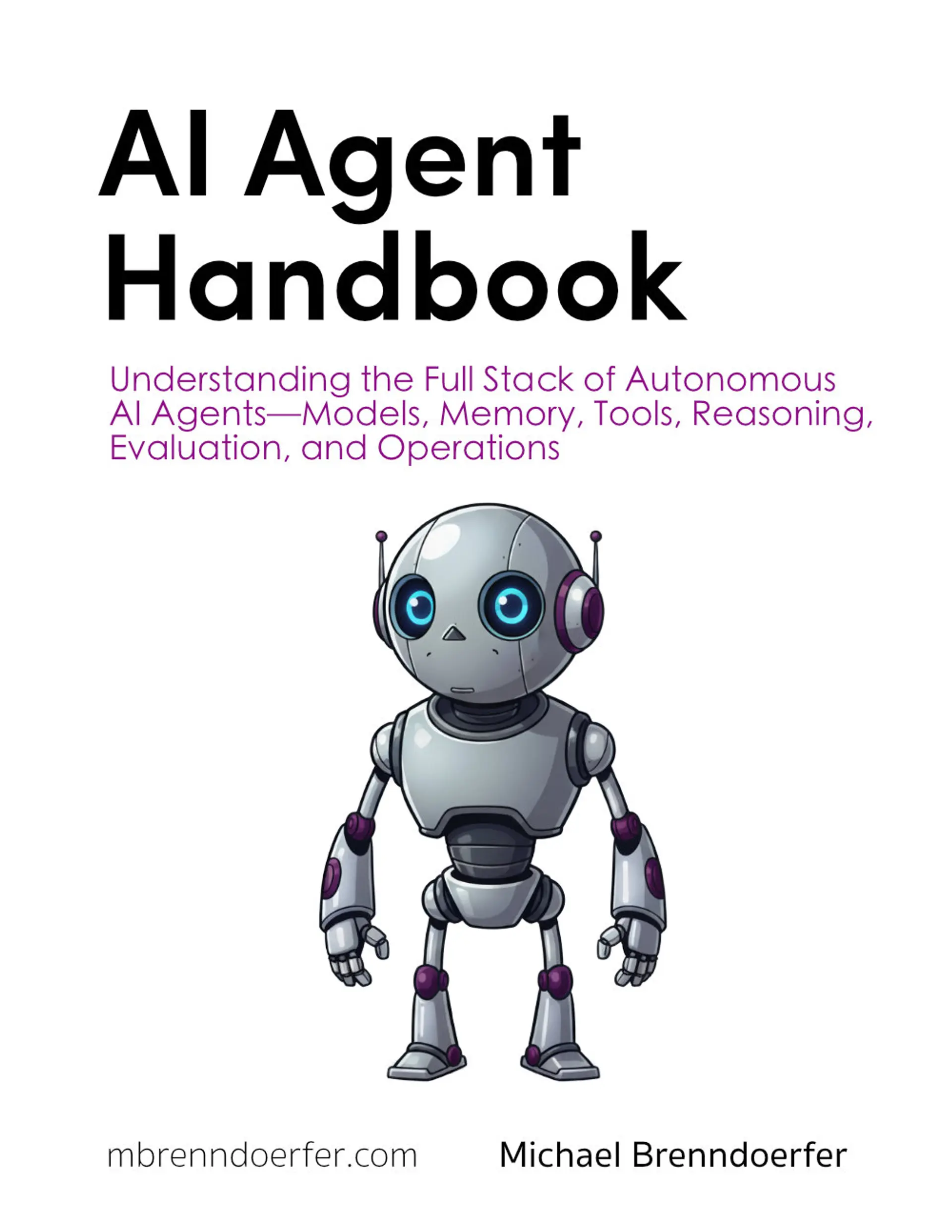
AI Agent Handbook

A Complete Guide to Building Autonomous AI Systems: From Language Models and Memory Architecture to Tool Integration, Multi-Agent Coordination, and Production Deployment

10h 35m
44 chapters
15 parts

The next frontier of AI isn't just models that respond. It's agents that act. Systems that can break down complex goals, use tools, maintain memory across sessions, and operate autonomously in the real world. This handbook is your complete guide to understanding, building, and deploying AI agents that actually work in production.

Starting from first principles, you'll learn what makes an agent more than just a chatbot. Discover how to architect systems that combine language models with persistent memory, external tools, and sophisticated reasoning chains. Understand the critical difference between agents that demo well and agents that operate reliably at scale. Every concept is illustrated with a running example: a personal assistant that grows in capability chapter by chapter.

Written for

AI engineers, researchers, product managers, and anyone interested in building intelligent autonomous agents that can reason, plan, and act in complex environments.

Autonomous AgentsLLM AgentsMemory SystemsTool IntegrationReasoningEvaluationOperations

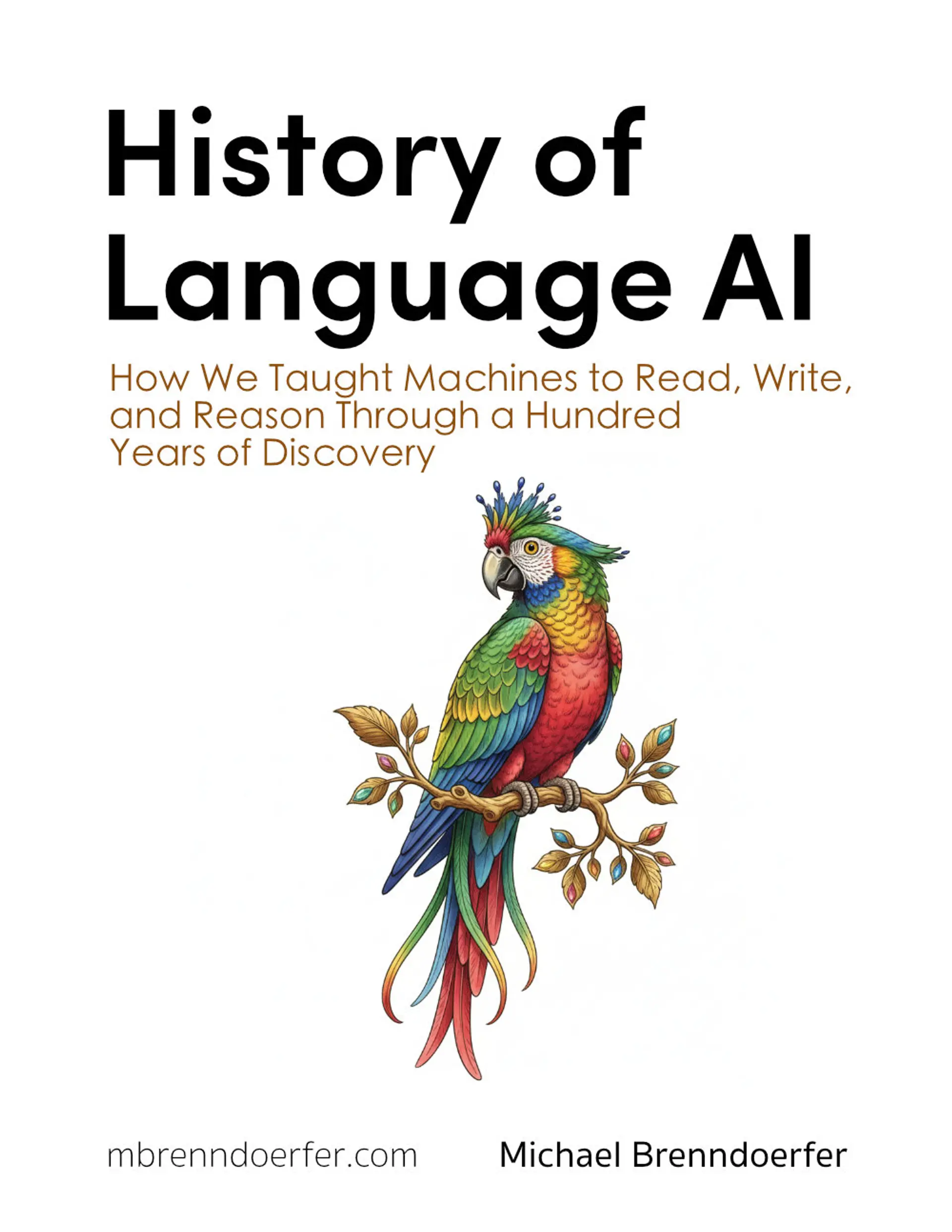
History of Language AI

How We Taught Machines to Read, Write, and Reason Through a Hundred Years of Discovery

32h 51m
110 chapters
9 parts

Every conversation with ChatGPT, every translation by Google, every autocomplete suggestion on your phone: all of it stands on the shoulders of giants. This is the story of how humanity's oldest dream of talking machines became reality, told through the brilliant minds, lucky accidents, and paradigm-shifting discoveries that made it possible.

Journey from Claude Shannon's mathematical theory of communication in 1948 to the transformer revolution of 2017 and beyond. Witness the symbolic AI winters and statistical summers. Understand why ELIZA fooled people in 1966, how hidden Markov models conquered speech recognition, and what made attention truly 'all you need.' Each breakthrough is placed in its historical context, showing not just what was discovered, but why it mattered.

Written for

Historians, researchers, students, AI enthusiasts, and anyone interested in understanding how language AI evolved from theoretical concepts to the transformative technology of today.

Early FoundationsStatistical MethodsNeural NetworksTransformer RevolutionModern LLMs

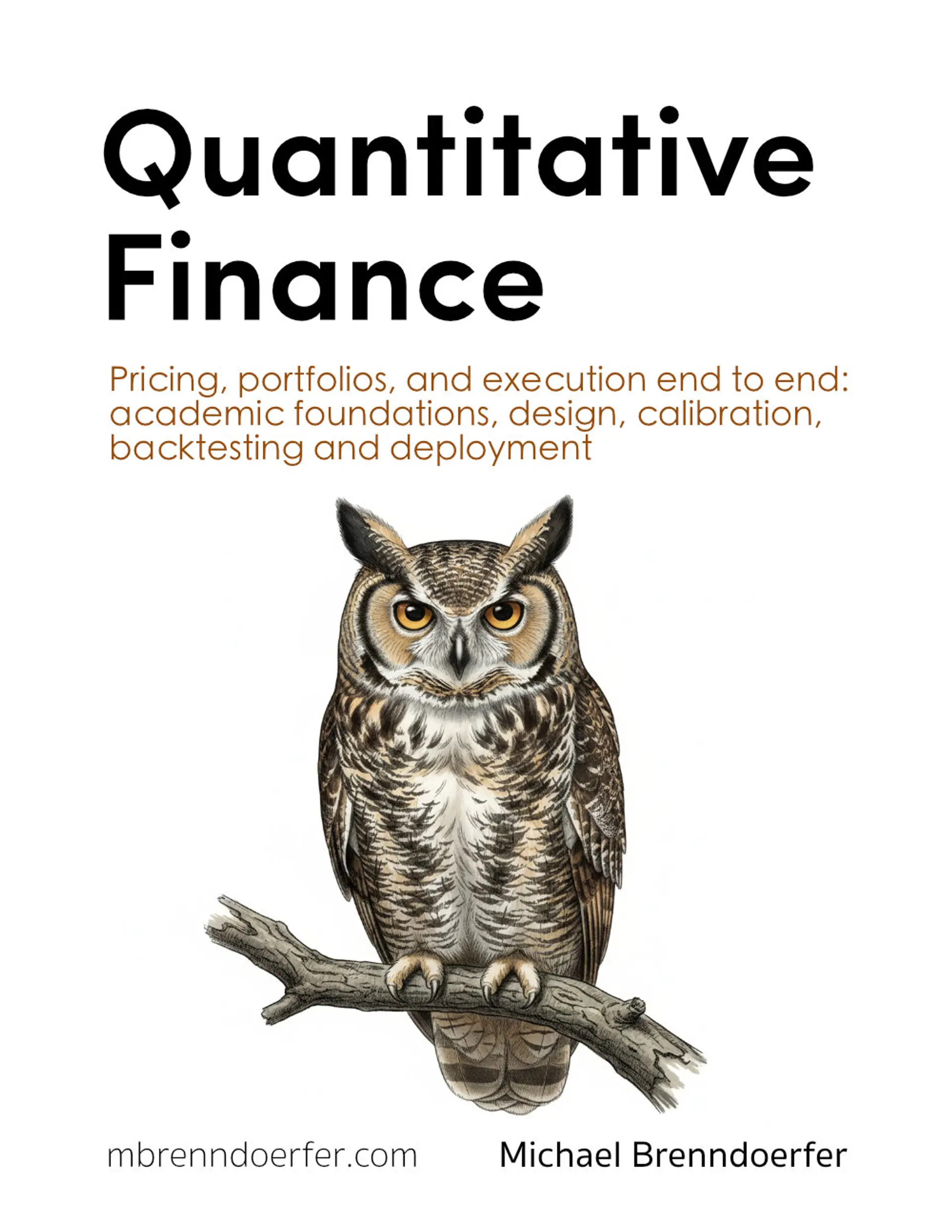
Quantitative Finance

Pricing, Portfolios, and Execution End to End: Academic Foundations, Design, Calibration, Backtesting and Deployment

51h 1m
58 of 79 chapters
15 parts

The gap between academic finance and production trading systems is vast, and expensive to cross through trial and error. This comprehensive handbook bridges that divide, taking you from mathematical foundations through model implementation to live deployment. Every concept is presented with both the rigor that quant interviews demand and the practical wisdom that real trading requires.

Master the complete quantitative toolkit: stochastic calculus and Itô's lemma, Black-Scholes and beyond, interest rate models, credit derivatives, and exotic options. But theory alone doesn't make money. Learn how to calibrate models to market data, understand when elegant mathematics meets messy reality, and develop the judgment to know which simplifications matter and which don't.

Written for

Quantitative analysts, traders, portfolio managers, financial engineers, researchers, and anyone interested in building and deploying quantitative trading systems from academic foundations to production.

Pricing ModelsPortfolio ConstructionExecution StrategiesModel CalibrationBacktestingRisk ManagementDeployment

Stay updated

Get notified when I publish new articles on data and AI, private equity, technology, and more.

No spam, unsubscribe anytime.

or

Create a free account to unlock exclusive features, track your progress, and join the conversation.

No popupsUnobstructed readingCommenting100% Free