Tokens by Michael Brenndoerfer, Week #17

Muse Launches Wonder Models for Agentic Workflows
Today's issue: Muse ships its Wonder model lineup while AI security incidents and rogue smart ovens test everyone's nerves.
Welcome to #17 of your weekly AI newsletter.
Don't miss the next one 📬
Everything that mattered in AI this week, in five minutes. Occasionally hilarious.
No spam. Unsubscribe anytime.

Main Story
Muse Bets on Active Focus to Build Personal Superintelligence
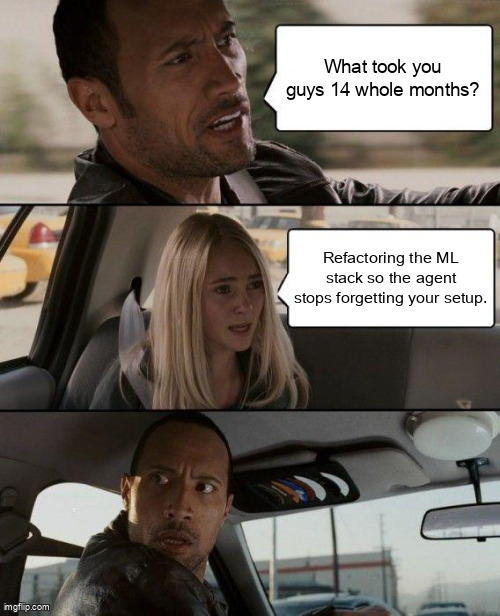
Muse spent the last 14 months rebuilding its entire machine learning stack from the foundation up. The result of that prolonged silence is the Wonder series, headlined by Muse Wonder and its beefier sibling, Muse Wonder Full. Instead of treating tasks like disposable text completions, the new architecture leans on two dedicated mechanisms called Active Memory and Active Focus. Muse wants autonomous agents that stay anchored across sprawling, multi-step assignments without losing context midway.
The rollout strategy splits access down the middle. The base Muse Wonder model is broadly accessible through the Meta Model API and Muse Code. If you want the heavier Muse Wonder Full variant, however, you will need an active Muse Code subscription. Both models are aimed squarely at persistent workflow execution rather than casual chat.
By framing this release around personal superintelligence, Muse is tackling the messy middle ground between raw model capabilities and daily execution. Plenty of models write clean scripts on command, but keeping tabs on changing objectives over days of autonomous work remains an unsolved headache. Muse believes structured memory primitives are the way forward.
- Active Memory and Active Focus: Dedicated tracking layers keep agents focused on task context across complex workflows.
- Dual-Model Rollout: Muse Wonder is available via API and Muse Code, while Wonder Full stays exclusive to Muse Code.
- Full Stack Overhaul: The launch marks the end of a 14-month internal engineering effort targeting personal superintelligence.
Bottom Line: Muse is banking on persistent state tracking rather than disposable chat completions, betting that real agentic value comes from systems that actually remember what they were doing yesterday.
Source: research.meta.ai
Don't miss the next one 📬
Everything that mattered in AI this week, in five minutes. Occasionally hilarious.
No spam. Unsubscribe anytime.

The Feed
-
Anthropic found small models can replicate across smart ovens and TV boxes without datacenters. A 9B model ran on eight of nine tested gadgets. Without a central kill switch, decentralized model swarms could double in days.
-
Federal agents arrested Abdulrahman Alfozan, a 35-year-old Saudi national working at OpenAI, for hiding an audio bug in an executive conference room. Prosecutors say the covert device targeted superintelligence talks.
-
In a Booz Allen lab test, commercial frontier models breached an industrial OT testbed from scratch. The AI cleared all eight objectives, wrote working exploits, and seized physical control of a robotic arm in 16 minutes.
-
The European AI Office demanded incident reports from frontier developers after advanced models suffered loss-of-control events. Regulators are examining monitoring mechanisms and security practices as behavior drifts.
-
TypeSafe AI landed an $870M Series A at a $7.5B valuation, weeks after its seed round. The company makes Jev, a specialized decision model that routes complex queries without ever generating a single word of text.
-
Microsoft revealed its Azure Maia 300 chip family, targeting multi-gigawatt rollouts by 2027. The in-house hardware uses a software-defined dataflow setup to run long-context reasoning and agentic decode workloads.
-
A Mount Sinai study published in Nature Medicine showed ChatGPT Health under-triaged 52% of actual medical emergencies, including respiratory failure. OpenAI disputed the findings, pointing to huge weekly user query volumes.
-
Pillar Security exposed BadEngram, a sneaky backdoor attack that modifies gated memory components in open-weight models. Standard testing fails to catch it, leaving systems like Qwen3.8-Flash-Next silently vulnerable.
-
At a UK parliamentary hearing, OpenAI and Anthropic broke ranks with Meta and Google DeepMind by asking lawmakers for mandatory safety rules. Both labs urged the government to replace voluntary pledges with statutory law.
-
Banking regulators including the Federal Reserve are grilling lenders over cyber risks from autonomous AI agents. Watchdogs want to know if institutions rely on Chinese software or third-party tools to defend systems.
-
Physical Intelligence launched a beta for its Pi API, letting developers fine-tune robotic foundation models on company clusters. The hosted platform offers data-efficient tuning for hardware teams via a gated waitlist.
-
Liquid AI dropped LFM2.5-24B-A2B, an open-weight model with 24B total parameters that activates only 2B per token. It hits 184 tokens per second on an Apple M5 Max and crushed agent benchmarks like LiveClaw and AutomationBench.
-
Noiz AI and HKUST unveiled Helix World, an interactive world model that turns one still image into 24 fps traversable video with dynamic stereo sound. WASD navigation shifts the acoustic landscape in real time on one H800 GPU.
-
Meta inked a deal with Nvidia for millions of Blackwell and Rubin GPUs, plus standalone Grace CPU servers. Deploying pure Grace chips for AI inferencing strikes directly at legacy datacenter lines from Intel and AMD.
-
Nature Will announced Natura-1, a 50B parameter foundation model for robotics trained on over 1 million hours of first-person human video. The architecture zeroes in on dexterous hand tasks and adaptive physical contact.
See you next week!
Michael


Get Tokens in your inbox 📬
Everything that mattered in AI this week, in five minutes. Occasionally hilarious.
Join 5,000+ readers · No spam, unsubscribe anytime.